08
Oct
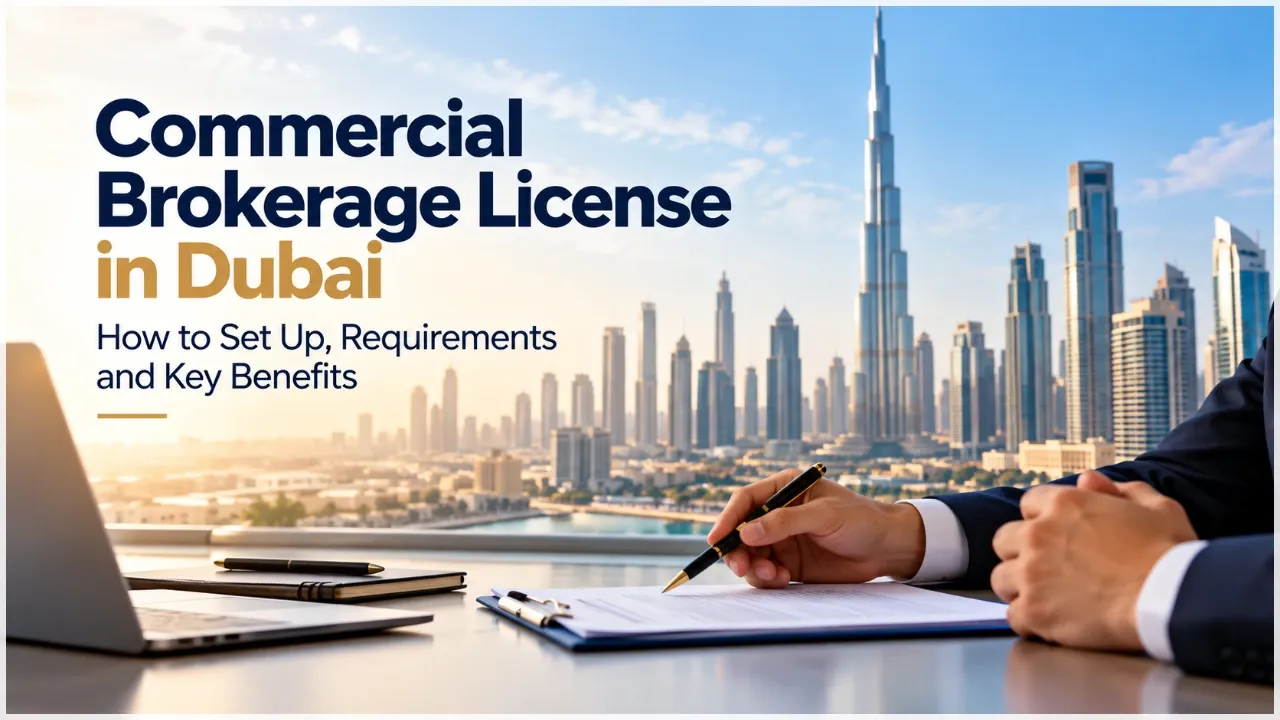
How to Set Up a Commercial Brokerage Business in Dubai
Dubai's position as a premier international commercial crossroads makes it one of the most dynamic business environments in the world. Thousands of international corporations, trade syndicates, suppliers, and retail distributors converge in the emirate daily to negotiate contracts, exchange commodities, and form cross-border partnerships. At the center of this thriving economic ecosystem are commercial brokerages—specialized intermediary firms that connect buyers and sellers, broker high-value business transactions, and facilitate international trade agreements without physically holding inventory.
Establishing a commercial brokerage in Dubai provides entrepreneurs with an agile, high-margin business model. Commercial brokers earn substantial commissions and finder fees by bridging market gaps across manufacturing, wholesale trade, maritime freight, and corporate service sectors. However, because commercial brokers manage sensitive commercial negotiations and contractual relationships, the Department of Economy and Tourism (DET) strictly regulates the issuance of commercial brokerage licenses. Entrepreneurs must carefully structure their legal entities, define their brokerage activity scopes, draft robust intermediary contracts, and implement strict anti-money laundering controls to build a sustainable, fully compliant operation.
Understanding the Scope of a Commercial Brokerage License
A Commercial Brokerage License issued by DET or an authorized free zone allows a business to act as an intermediary between commercial entities. The broker's statutory role is to bring contracting parties together, assist in contract negotiations, and facilitate transaction closings in exchange for pre-agreed brokerage fees or commissions.
It is essential to distinguish between commercial brokerage and related licensed commercial activities:
- Commercial Brokerage vs General Trading: A commercial broker does not take title to the goods, maintain warehouse inventory, or import products under its own name. The broker connects the buyer directly with the seller. Entities seeking to import, warehouse, and sell products directly must obtain a commercial trading or general trading license.
- Commercial Brokerage vs Real Estate Brokerage: Commercial brokerage focuses strictly on commercial goods, commodities, and business-to-business contracts. Brokering property sales, leasing, or real estate developments requires a dedicated Real Estate Brokerage license regulated by RERA.
- Commercial Brokerage vs Financial Brokerage: Acting as an intermediary for financial securities, stocks, foreign currencies, or derivatives falls under the strict regulatory jurisdiction of the Securities and Commodities Authority (SCA) and the Central Bank of the UAE.
Choosing the Optimal Business Structure: Mainland vs Free Zone
Entrepreneurs launching a commercial brokerage firm can choose between establishing their company in mainland Dubai or within an established free trade zone:
| Jurisdiction Factor | Dubai Mainland (DET) | UAE Free Trade Zones |
|---|---|---|
| Operational Reach | Direct access to all mainland UAE companies, government tenders, and global markets | Primarily international trade and inter-free zone commercial intermediation |
| Foreign Ownership | 100% foreign ownership permitted for commercial brokerage activities | 100% foreign ownership standard across all free zones |
| Office Space Requirements | Physical office or approved commercial business center desk required for Ejari | Flexible flexi-desk, shared co-working, or dedicated office packages available |
| Banking and Credibility | High credibility with local corporate banks and international institutional clients | Reputable, though banking onboarding depends on substance and counterparty jurisdictions |
| Regulatory Compliance | Regulated directly by DET commercial registries and federal corporate laws | Regulated by the respective Free Zone Authority and federal compliance rules |
Step-by-Step Guide to Establishing Your Commercial Brokerage
Setting up a commercial brokerage firm requires completing a structured series of legal and commercial milestones to ensure full regulatory standing.
Step 1: Activity Definition and Trade Name Approval
Select the precise commercial brokerage activity codes matching your business model from the DET activity register. Submit three proposed company names for trade name reservation. The chosen name should reflect your intermediation focus and comply with all DET linguistic and cultural naming rules.
Step 2: Securing Initial Commercial Approval
Apply for Initial Approval from the Department of Economy and Tourism. This milestone verifies that the licensing authority raises no objection to the shareholders, proposed company directors, or intended brokerage activities, allowing the company to proceed with legal drafting and leasing.
Step 3: Drafting Constitutional Documents (MOA)
Draft the Memorandum of Association (MOA) for a Limited Liability Company (LLC) structure or Articles of Incorporation for a Sole Establishment. The MOA defines shareholder equity, voting governance, manager powers, and profit-sharing ratios. Modern MOA notarization is completed seamlessly online via Dubai Courts digital systems or UAE Pass authentication.
Step 4: Arranging Registered Office and Ejari Authentication
Every commercial brokerage firm must secure a verifiable commercial office address in Dubai. Startups can utilize approved business center executive desks or private commercial offices. The tenancy contract must be formally authenticated through the Dubai Land Department's Ejari system to link the premise directly to the trade license file.
Step 5: Trade License Issuance and Corporate Onboarding
Submit all finalized documents, including the attested MOA, Ejari certificate, and shareholder identification records, to DET. Settle the statutory licensing fees to receive your official Dubai Commercial Brokerage Trade License. With the license issued, the company can establish its corporate establishment card with the Ministry of Human Resources and Emiratisation (MoHRE) and the General Directorate of Residency and Foreigners Affairs (GDRFA) to begin sponsoring employee residence visas.
Essential Operational Infrastructure for Commercial Brokers
While securing a trade license establishes your legal entity, operational success depends heavily on implementing robust legal and commercial safeguards from day one:
- Bespoke Intermediary Agreements: Brokers must never initiate introductions without executing watertight Non-Circumvention, Non-Disclosure Agreements (NCNDAs) and formal Brokerage Fee Agreements. These contracts define commission structures, payment trigger milestones, and dispute resolution venues under UAE law.
- Corporate Bank Account Opening: Commercial brokerages handle cross-border consulting fees and commission payments. Establishing a corporate account requires presenting a transparent business profile, verified shareholder resumes, sample intermediary contracts, and proof of source of funds.
- Anti-Money Laundering (AML) Compliance: Because commercial brokers often facilitate high-value deals between third parties, they must implement strict Know Your Customer (KYC) onboarding protocols to verify the beneficial ownership and legitimacy of transaction counterparties.
- Accounting and Tax Infrastructure: Commercial brokerage revenue is subject to standard UAE tax regulations. The business must maintain timely bookkeeping, register for VAT when reaching statutory revenue thresholds, and register for Federal Corporate Tax.
Structuring Cross-Border Commission Flows and Escrow Protections
Operating a successful commercial brokerage in Dubai requires sophisticated financial and contractual infrastructure to manage international commission payments and protect intermediary finder fees. Because commercial brokers frequently coordinate high-value transactions involving overseas buyers, domestic manufacturers, and multi-jurisdictional supply chains, establishing transparent, legally enforceable payment channels is essential.
Brokers should incorporate structured escrow mechanisms into their transaction frameworks whenever handling complex, multi-party deals. Utilizing accredited UAE escrow agents or specialized banking facilities guarantees that transaction funds are securely held until all contractual milestones, quality inspections, and shipping releases are verified by both primary parties. Furthermore, commercial brokerages must maintain rigorous documentation for every commission received, including the underlying commercial agreement, proof of counterparty identity, and transaction invoices. Maintaining immaculate transaction records ensures smooth compliance reviews with local corporate banking institutions and prevents unnecessary compliance holds on international wire transfers.
Navigating Pitfalls in the Commercial Brokerage Industry
New brokerage firms frequently encounter challenges by failing to formalize commission agreements prior to introducing buyers to sellers, resulting in protracted fee disputes. Other common pitfalls include misclassifying activities by attempting to execute direct import transactions on a brokerage license or delaying corporate tax registration. By engaging experienced business setup consultants, corporate founders ensure that their commercial licensing, legal documentation, and banking setups are executed flawlessly from the very beginning.
Frequently Asked Questions
Can a commercial broker import and warehouse goods in Dubai?
No. A commercial brokerage license permits acting solely as an intermediary between buyers and sellers. Importing, warehousing, and selling goods directly requires a commercial trading or general trading license.
Can foreigners own 100% of a commercial brokerage company in mainland Dubai?
Yes. Under current UAE Commercial Companies Law, foreign investors can hold 100% ownership of commercial brokerage companies in mainland Dubai without a local sponsor.
What contracts are essential for a commercial brokerage firm?
Commercial brokers must utilize well-drafted Non-Circumvention, Non-Disclosure Agreements (NCNDAs) and formal Commission / Brokerage Fee Agreements to legally protect their fees and relationships.
Do commercial brokerages in Dubai need a physical office?
Yes. Mainland licensing requires a physical commercial space authenticated through an Ejari certificate, which can range from an executive desk in a business center to dedicated office space.
Is a commercial brokerage license in Dubai subject to corporate tax?
Yes. Commercial brokerage firms are standard taxable persons subject to UAE Corporate Tax Law, requiring registration with the Federal Tax Authority and annual return filing.
Ready to Launch Your Commercial Brokerage in Dubai?
Right Time Business Setup provides complete corporate formation assistance for commercial brokerages, including DET licensing, 100% foreign ownership structuring, office Ejari, and corporate bank account guidance. Contact our specialists today.
Start Your Brokerage Setup