06
Aug
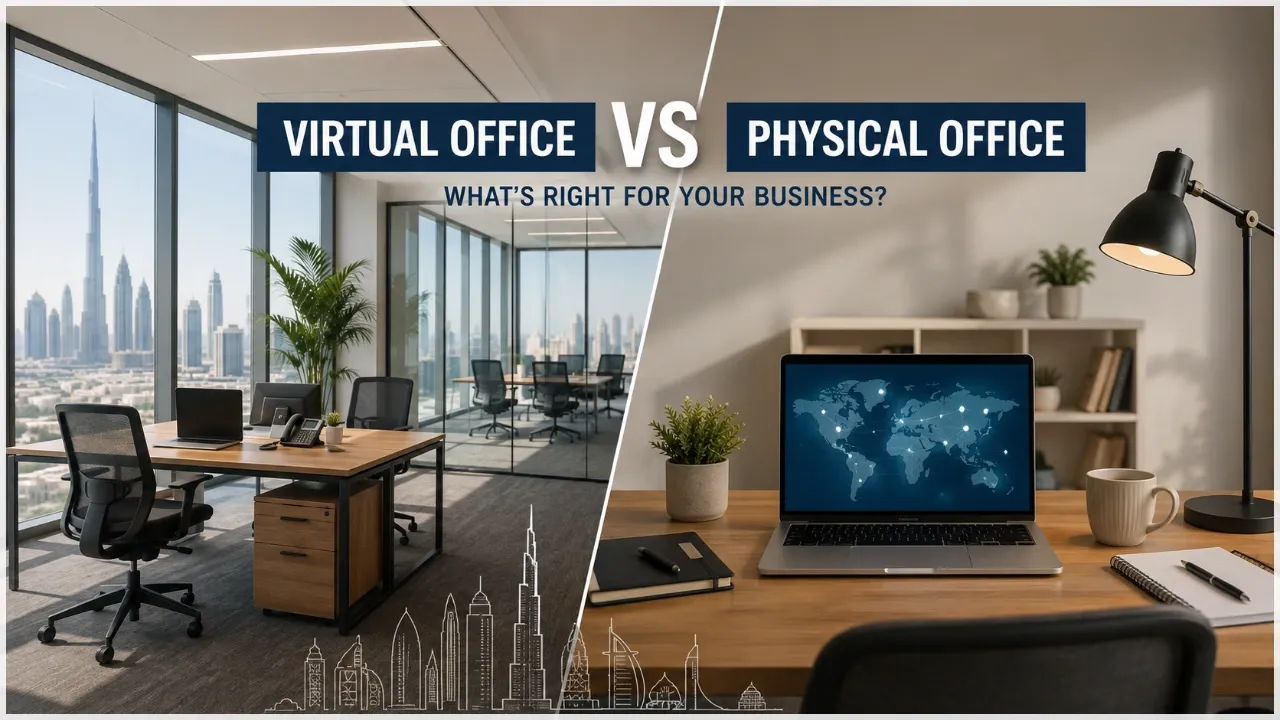
Virtual Office vs Physical Office for New Businesses in Dubai
Dubai has become one of the world's most attractive destinations for entrepreneurs, startups, freelancers, and international investors. With a strategic location, world-class infrastructure, tax-friendly policies, and access to global markets, the city offers excellent opportunities for businesses of all sizes.
One of the first decisions entrepreneurs face during company formation is choosing between a virtual office and a physical office. Both options offer unique advantages, and the right choice depends on your business goals, budget, operational needs, and future growth plans.
Many first-time business owners assume that a physical office is always necessary. Others believe a virtual office is enough for every type of business. The reality lies somewhere in between.
This guide explains the differences between virtual and physical offices, their benefits and limitations, and how to determine which option is best for your business in Dubai.
Target Audience: Entrepreneurs, startups, freelancers, SMEs, foreign investors, and businesses planning company setup in Dubai.
Understanding Office Requirements in Dubai
When establishing a company in Dubai, office requirements often depend on:
- Business activity
- Licensing authority
- Company jurisdiction
- Number of employee visas
- Nature of operations
Some businesses require dedicated office space, while others can legally operate using flexible workspace solutions or virtual office packages.
Choosing the right office solution can significantly affect your startup costs and operational flexibility.
What Is a Virtual Office?
A virtual office provides businesses with a professional business address and selected office services without requiring permanent physical workspace.
Typical virtual office services include:
- Business address
- Mail handling
- Telephone answering
- Meeting room access
- Reception services
- Administrative support (depending on the provider)
Employees usually work remotely while using the business address for official communication.
Benefits of a Virtual Office
Lower Startup Costs
One of the biggest advantages is affordability.
Instead of paying for:
- Office rent
- Furniture
- Utilities
- Maintenance
- Cleaning
- Internet installation
you only pay for the services you actually need.
This helps startups preserve valuable capital during the early stages.
Greater Flexibility
A virtual office allows business owners to work from:
- Home
- Client locations
- Co-working spaces
- Different countries
This flexibility is especially valuable for consultants, digital agencies, IT companies, and online businesses.
Professional Business Presence
Using a professional business address creates a stronger impression than using a residential address.
Clients often feel more confident dealing with businesses that have an established commercial address.
Ideal for International Entrepreneurs
Many overseas investors visit Dubai only when necessary.
A virtual office enables them to establish a local presence while managing daily operations remotely.
Limitations of a Virtual Office
Although virtual offices offer many benefits, they are not suitable for every business.
Common limitations include:
- Limited access to permanent workspace
- Not ideal for businesses requiring customer visits
- Restrictions depending on licensing regulations
- Limited storage facilities
- Team collaboration may become challenging as the company grows
What Is a Physical Office?
A physical office provides dedicated commercial space where employees work daily and customers can visit.
Examples include:
- Private offices
- Commercial shops
- Retail outlets
- Warehouses with office space
- Corporate office suites
This option is generally chosen by businesses with employees, regular client meetings, or operational requirements.
Benefits of a Physical Office
Builds Customer Trust
Many customers prefer visiting an office before signing contracts or making large purchases.
A professional office creates confidence and strengthens your company's image.
Better Team Collaboration
When employees work together in one location, communication becomes easier.
Daily discussions, brainstorming sessions, and problem-solving often happen faster than in fully remote teams.
Suitable for Growing Businesses
Businesses expecting rapid expansion may benefit from dedicated office space because it allows room for:
- Hiring employees
- Meeting clients
- Managing inventory
- Holding presentations
- Conducting training sessions
Easier Client Meetings
Instead of renting meeting rooms whenever needed, businesses have a permanent place to welcome customers and partners.
Limitations of a Physical Office
Physical offices involve significantly higher expenses.
Typical costs include:
- Monthly rent
- Security deposit
- Office furniture
- Utilities
- Internet
- Maintenance
- Cleaning
- Office equipment
- Parking (where applicable)
For new startups with limited budgets, these expenses can reduce available funds for marketing, hiring, and product development.
Virtual Office vs Physical Office
| Feature | Virtual Office | Physical Office |
|---|---|---|
| Initial Cost | Low | High |
| Monthly Expenses | Low | Higher |
| Business Address | Yes | Yes |
| Dedicated Workspace | No | Yes |
| Client Meetings | Limited | Easy |
| Team Collaboration | Remote | In-person |
| Flexibility | Excellent | Moderate |
| Suitable for Remote Business | Excellent | Good |
| Suitable for Retail | No | Yes |
| Business Expansion | Moderate | Excellent |
Which Businesses Benefit Most from a Virtual Office?
A virtual office is often suitable for:
- Freelancers
- Consultants
- IT companies
- Digital marketing agencies
- Software developers
- E-commerce startups
- Import/export businesses
- International entrepreneurs
- Online education providers
Example
A software development company serving clients in Europe operates entirely online.
Employees work remotely, meetings happen via video calls, and documents are shared digitally.
In this case, a virtual office can reduce costs without affecting business operations.
Which Businesses Need a Physical Office?
A dedicated office is generally more suitable for:
- Retail businesses
- Medical clinics
- Restaurants
- Beauty salons
- Educational institutes
- Real estate agencies
- Manufacturing businesses
- Companies with large employee teams
- Businesses receiving regular client visits
Example
An interior design company frequently hosts customers to review samples and project plans.
A professional office creates a better customer experience than arranging meetings in rented spaces.
Factors to Consider Before Choosing
Before deciding, ask yourself the following questions:
1. What is your startup budget?
If keeping costs low is your priority, a virtual office may be the better option.
2. Will customers visit your office?
If client meetings are frequent, a physical office offers greater convenience and professionalism.
3. How many employees will you have?
Remote teams often work efficiently with virtual offices.
Larger teams usually benefit from dedicated office space.
4. What are your future expansion plans?
If you expect rapid growth, choosing office space that can scale with your business may save time later.
5. What are your licensing requirements?
Some business activities require specific office arrangements.
Understanding these requirements before registration helps avoid unexpected changes later.
Can You Start with a Virtual Office and Upgrade Later?
Yes.
Many entrepreneurs begin with a virtual office to minimize startup costs.
As the business grows, they later move into:
- Private offices
- Larger commercial spaces
- Multiple branches
This gradual approach allows businesses to invest more in marketing, recruitment, and product development during their early stages.
Tips for Making the Right Decision
Before selecting your office solution:
- Define your business activities.
- Estimate your first-year budget.
- Understand licensing requirements.
- Evaluate customer expectations.
- Consider employee requirements.
- Think about future growth.
- Compare long-term operational costs instead of only initial expenses.
Taking time to evaluate these factors will help you choose an office solution that supports your business today while allowing room for future expansion.
Conclusion
Choosing between a virtual office and a physical office is one of the most important decisions when setting up a business in Dubai. Both options offer distinct advantages, and neither is universally better than the other.
A virtual office is an excellent solution for startups, freelancers, consultants, and online businesses seeking flexibility and lower operational costs. On the other hand, businesses that rely on customer interactions, larger teams, or physical operations often benefit from a dedicated office space.
By carefully evaluating your business model, budget, licensing requirements, and long-term goals, you can make a decision that supports sustainable growth and operational efficiency from day one.
Frequently Asked Questions
1. What is a virtual office in Dubai?
A virtual office provides a professional business address and administrative services without requiring a dedicated physical workspace.
2. Is a virtual office suitable for every business?
No. It is ideal for remote businesses, freelancers, consultants, and startups, while businesses that require customer visits or physical operations may need a dedicated office.
3. Is a physical office mandatory for company registration in Dubai?
Office requirements vary depending on the business activity, licensing authority, and jurisdiction. It's important to understand the applicable requirements before registering your company.
4. Can I upgrade from a virtual office to a physical office later?
Yes. Many businesses begin with a virtual office to reduce startup costs and move to a physical office as they grow.
5. Which option is more cost-effective for a startup?
A virtual office is generally more affordable because it eliminates expenses such as office rent, utilities, furniture, and maintenance.
Find the Right Office for Your Dubai Business
Whether you're launching a startup, expanding into the UAE, or looking for a cost-effective workspace, our experts can help you choose the right office solution and guide you through every step of your company setup.
Speak with Our Business Setup Experts