29
Jul
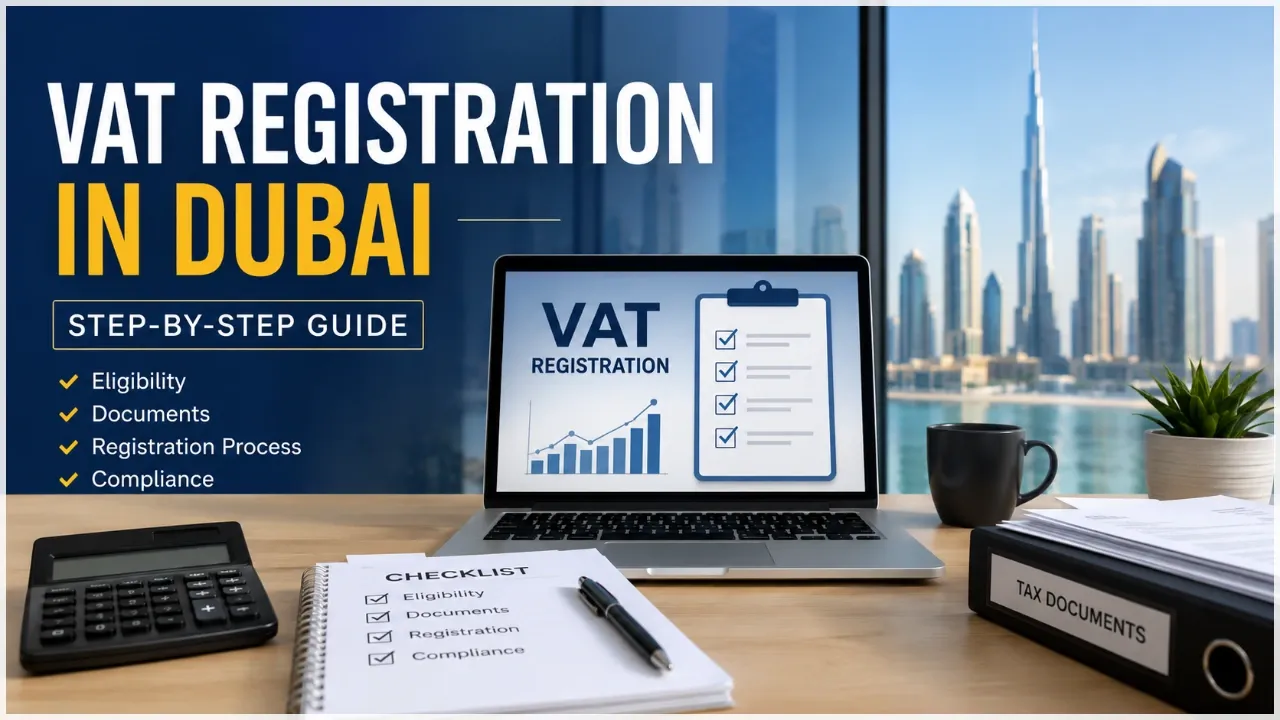
VAT Registration in Dubai: Step-by-Step Guide
Businesses operating in the UAE must comply with the country's tax regulations, and one of the most important requirements is VAT registration. Whether you are launching a startup, opening a branch office, or expanding an existing company, understanding the VAT registration process helps you stay compliant and avoid unnecessary penalties.
Many business owners assume that VAT registration is complicated, but with proper preparation, it can be completed smoothly. Knowing when registration is required, what documents are needed, and how the process works can save valuable time and prevent costly mistakes.
This guide explains VAT registration in Dubai step by step, making it easier for entrepreneurs, startups, SMEs, and established businesses to understand their obligations and complete the registration successfully. The content also aligns with commonly searched business services such as VAT registration Dubai, VAT filing services Dubai, bookkeeping services Dubai, and FTA tax registration assistance.
What is VAT?
Value Added Tax (VAT) is an indirect tax charged on most goods and services sold in the UAE. Introduced in January 2018, VAT contributes to the country's economic development while maintaining one of the world's lowest VAT rates.
Currently, the standard VAT rate in the UAE is 5%.
Businesses registered for VAT collect tax from customers and remit it to the Federal Tax Authority (FTA), while also claiming eligible input tax paid on business purchases.
Who Needs VAT Registration in Dubai?
Not every business must register immediately. Registration depends primarily on the annual taxable turnover.
Mandatory Registration
A business must register for VAT if its taxable supplies exceed AED 375,000 annually.
Examples include:
- Trading companies
- Manufacturing businesses
- Restaurants
- Professional service firms
- E-commerce businesses
- Import-export companies
Voluntary Registration
Businesses earning more than AED 187,500 may voluntarily register.
Many startups choose voluntary registration because it allows them to:
- Claim VAT on business expenses
- Improve business credibility
- Work with larger corporate clients
- Prepare for future business growth
Benefits of VAT Registration
VAT registration offers more than legal compliance.
Some advantages include:
- Compliance with UAE tax laws
- Ability to recover eligible input VAT
- Increased business credibility
- Better financial record management
- Improved transparency
- Easier participation in government and corporate contracts
Documents Required for VAT Registration
Preparing the correct documents beforehand makes the application much faster.
Generally, businesses should have:
- Trade License
- Emirates ID and passport copies of owners or partners
- Business contact details
- Memorandum of Association (if applicable)
- Bank account details
- Revenue information
- Import and export details (if applicable)
- Customs registration information (if available)
Depending on the business structure, additional documents may be requested by the Federal Tax Authority.
Step-by-Step VAT Registration Process
Step 1: Determine Your Eligibility
The first step is to calculate your taxable turnover.
Include:
- Taxable sales
- Taxable services
- Imports
- Exports where applicable
Do not assume registration is unnecessary without reviewing your annual turnover carefully.
Step 2: Gather Business Documents
Ensure that all business information is accurate.
Double-check:
- Trade license validity
- Business activities
- Contact details
- Financial figures
Small inconsistencies can delay the approval process.
Step 3: Create an FTA Account
The Federal Tax Authority provides an online portal where businesses complete VAT registration.
During account creation, you'll provide:
- Business information
- Email address
- Contact details
The portal allows businesses to manage future VAT filings after registration.
Step 4: Complete the VAT Registration Application
The online application requires detailed business information.
Typical sections include:
Business Details
- Company name
- Trade license number
- Business activity
- Office address
Financial Information
- Annual revenue
- Estimated turnover
- Taxable supplies
Banking Information
Provide business banking details if requested.
Business Activities
Explain the nature of operations, including:
- Trading
- Consultancy
- Manufacturing
- Services
- Import and export
Providing accurate information helps avoid unnecessary clarification requests.
Step 5: Upload Supporting Documents
Upload clear digital copies of all required documents.
Ensure that:
- Documents are readable
- Information matches the application
- Expired documents are not submitted
Step 6: Submit the Application
Once everything has been reviewed:
- Verify all entries
- Check uploaded documents
- Submit the application
The Federal Tax Authority reviews the submission before making a decision.
Step 7: Receive VAT Registration Approval
If approved, your business receives:
- Tax Registration Number (TRN)
- VAT registration certificate
From this point onward, VAT must be charged where applicable according to UAE tax regulations.
Practical Example
Imagine a Dubai-based electronics trading company.
Annual sales:
- AED 650,000
Since the revenue exceeds the mandatory threshold, the business must register for VAT.
After registration:
- The company charges 5% VAT on taxable sales.
- It collects VAT from customers.
- It claims eligible VAT paid on inventory purchases.
- It submits VAT returns to the Federal Tax Authority according to the required schedule.
This keeps the business fully compliant while allowing recovery of eligible input tax.
Common Mistakes to Avoid
Many businesses delay registration or make avoidable errors.
Common mistakes include:
- Registering too late
- Entering incorrect revenue figures
- Uploading incomplete documents
- Forgetting to update business information
- Missing VAT filing deadlines
- Poor bookkeeping practices
Keeping accurate financial records significantly reduces these risks.
After VAT Registration
Registration is only the beginning.
Businesses must continue fulfilling their tax obligations.
These include:
- Issuing VAT-compliant invoices
- Maintaining accounting records
- Filing VAT returns on time
- Paying VAT before deadlines
- Retaining financial documents
- Monitoring turnover regularly
Failure to meet these obligations may result in penalties.
Why Professional VAT Assistance Can Help
Although businesses can register independently, many choose professional assistance to ensure accuracy and compliance.
Professional consultants can assist with:
- VAT eligibility assessment
- Document preparation
- Online application
- FTA registration support
- VAT filing
- Bookkeeping
- Corporate tax coordination
- Compliance guidance
This is especially valuable for new entrepreneurs unfamiliar with UAE tax regulations.
VAT Registration and Bookkeeping Go Together
VAT compliance becomes much easier when proper bookkeeping is maintained.
Accurate accounting helps businesses:
- Track taxable sales
- Monitor expenses
- Prepare VAT returns
- Calculate tax liabilities
- Handle audits confidently
- Maintain organized financial records
Businesses that keep their accounts updated usually experience fewer compliance issues.
Choosing the Right Time to Register
Waiting until the last minute can create unnecessary pressure.
Businesses should regularly monitor:
- Monthly revenue
- Annual turnover
- Business expansion plans
- New contracts
- Import and export activities
If turnover is approaching the registration threshold, it is wise to begin preparing the required documentation in advance.
Conclusion
VAT registration is an important milestone for businesses operating in Dubai. Whether registration is mandatory or voluntary, understanding the process helps business owners remain compliant and manage their finances more efficiently.
By preparing the correct documents, following the registration steps carefully, and maintaining accurate bookkeeping, businesses can avoid delays, reduce compliance risks, and focus on growth. Seeking professional guidance can also simplify the process, especially for startups and companies navigating UAE tax regulations for the first time.
Frequently Asked Questions
1. Who must register for VAT in Dubai?
Businesses with annual taxable turnover exceeding AED 375,000 must register for VAT, while businesses earning over AED 187,500 may choose voluntary registration.
2. How long does VAT registration take in Dubai?
Processing times vary depending on the completeness of the application and document verification by the Federal Tax Authority.
3. What documents are required for VAT registration?
Typically, businesses need a trade license, Emirates ID, passport copies, financial details, bank information, and supporting business documents.
4. Can startups register for VAT voluntarily?
Yes. Businesses meeting the voluntary registration threshold can register and benefit from claiming eligible input VAT.
5. What happens after VAT registration?
Businesses receive a Tax Registration Number (TRN) and must charge VAT where applicable, maintain records, file VAT returns, and comply with UAE tax regulations.
Need Help with VAT Registration in Dubai?
Our experienced consultants can guide you through the complete VAT registration process, prepare your documents, assist with FTA registration, and help keep your business compliant with UAE tax regulations.
Get VAT Registration Assistance