20
Aug
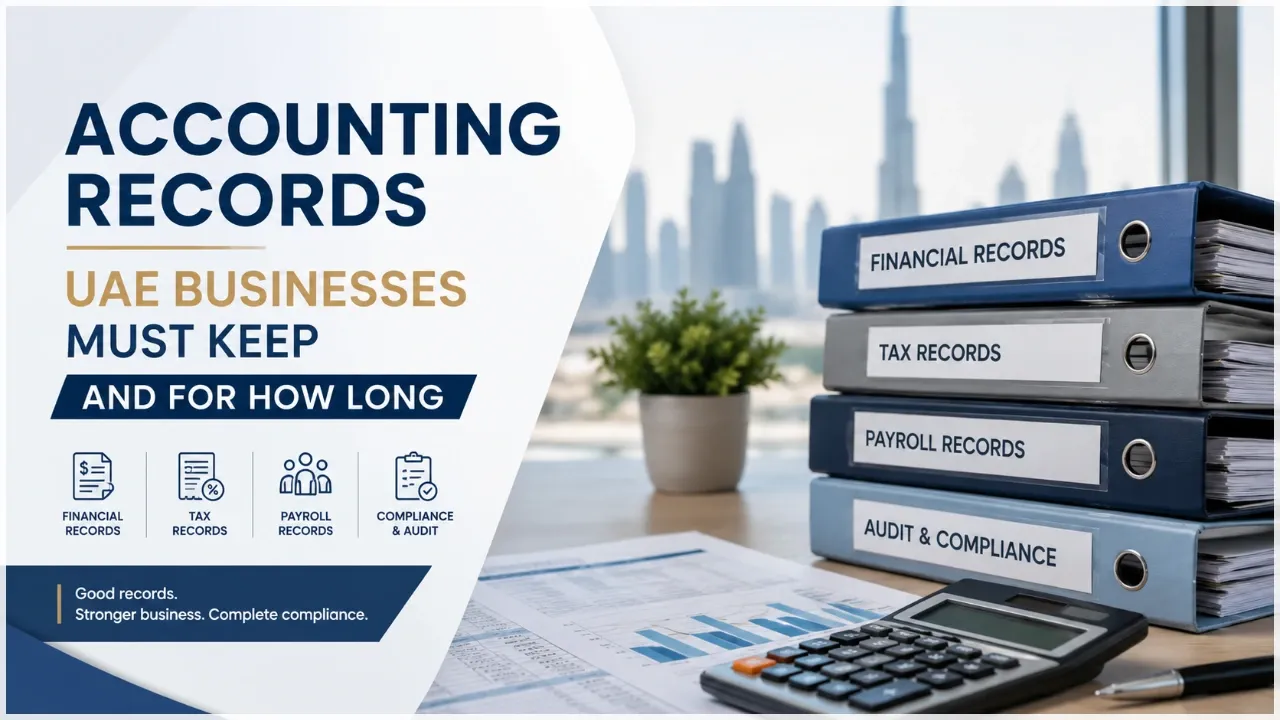
Accounting Records UAE Businesses Must Keep and for How Long
Running a business in the UAE involves more than managing sales, expenses, employees, and customers. Businesses also need to maintain proper accounting records that show how money moves through the company. These records are important for financial management, VAT and corporate tax compliance, audits, and responding to requests from the relevant authorities.
For a small business owner, keeping accounting records may sometimes feel like an administrative task that can be postponed. However, incomplete or poorly maintained records can make tax filings difficult and may create compliance risks.
This guide explains the main accounting records UAE businesses should maintain, how long they generally need to be kept, and how proper bookkeeping can make tax and financial management easier.
Why Are Accounting Records Important in the UAE?
Accounting records provide a clear picture of a company's financial activities. They help business owners understand whether the business is making a profit, where money is being spent, and what amounts are owed or payable.
Proper records are also useful for:
- Preparing financial statements
- Filing VAT returns
- Preparing corporate tax returns
- Supporting tax calculations
- Responding to tax authority queries
- Preparing for audits
- Tracking customer and supplier transactions
- Monitoring cash flow
- Making business decisions
- Supporting financing or investment applications
For example, imagine a Dubai trading company purchases goods worth AED 50,000 from a supplier and later sells them for AED 70,000. Proper invoices, payment records, purchase documents, inventory records, and sales records allow the company to demonstrate exactly how those transactions occurred.
How Long Must UAE Businesses Keep Accounting Records?
Under UAE tax rules, businesses generally need to retain relevant accounting and tax records for at least five years after the end of the relevant tax period.
However, the exact retention requirement can depend on the type of record and the applicable law. Certain records may need to be retained for longer in specific circumstances.
Businesses should therefore avoid deleting financial records simply because a tax return has already been submitted.
A practical approach is to maintain an organised archive covering:
- Sales and purchase transactions
- Bank and cash records
- Tax documents
- Payroll records
- Accounting ledgers
- Financial statements
- Supporting contracts and agreements
Keeping records electronically can make long-term storage considerably easier.
Key Accounting Records UAE Businesses Should Keep
1. Sales Invoices
Sales invoices are among the most important accounting documents for any business.
They provide evidence of goods or services supplied to customers and normally contain information such as:
- Seller and customer details
- Invoice number
- Date of supply
- Description of goods or services
- Amount charged
- Applicable VAT, where relevant
- Total amount payable
Businesses should keep copies of issued invoices together with related payment records.
2. Purchase Invoices
Purchase invoices document goods and services purchased by the business.
For example, an accounting firm in Dubai may purchase office equipment, software subscriptions, stationery, and professional services. The related invoices support the expenses recorded in its accounts.
Purchase invoices can also be important when determining eligible VAT input tax and calculating taxable income.
3. Bank Statements
Bank statements provide an independent record of money entering and leaving the business bank account.
Businesses should regularly reconcile their accounting records with bank statements to identify:
- Missing transactions
- Unrecorded payments
- Bank charges
- Customer receipts
- Supplier payments
- Loan repayments
- Other financial movements
Bank records should be retained alongside the corresponding accounting entries and supporting documents.
4. Cash and Petty Cash Records
Businesses that handle cash should maintain records showing cash received and cash spent.
For example, a small retail business may use petty cash for minor purchases such as delivery expenses, stationery, or emergency supplies.
Each payment should ideally be supported by a receipt or other appropriate document.
5. General Ledger and Accounting Records
The general ledger brings together the financial transactions of the business.
It can include accounts for:
- Sales
- Purchases
- Salaries
- Rent
- Utilities
- Bank charges
- Assets
- Liabilities
- Capital
- Other income and expenses
A properly maintained ledger makes it much easier to prepare financial statements and calculate tax obligations.
VAT Records Businesses Should Maintain
VAT-registered businesses have additional record-keeping responsibilities.
Important VAT records can include:
- Tax invoices issued
- Tax invoices received
- Credit notes
- Debit notes
- VAT return calculations
- Import and export documentation
- Records supporting zero-rated or exempt supplies
- Records supporting input VAT claims
- Records of adjustments
For example, if a company claims input VAT on an office equipment purchase, it should retain the relevant tax invoice and accounting record supporting the claim.
Businesses should ensure that VAT records are consistent with the VAT returns submitted to the Federal Tax Authority.
Corporate Tax Records
Corporate tax has made organised accounting even more important for UAE businesses.
Companies should maintain records that support the figures used when calculating taxable income and preparing corporate tax returns.
These may include:
- Revenue records
- Expense records
- Asset registers
- Depreciation information
- Loan and financing records
- Related-party transaction records
- Supporting contracts
- Financial statements
- Tax adjustments and calculations
The accounting records should allow the business to explain how it arrived at the figures reported in its corporate tax return.
Payroll and Employee-Related Records
Payroll records are another important part of business accounting.
Depending on the business structure and applicable requirements, records may include:
- Employee salary details
- Payroll calculations
- Salary payments
- Allowances
- Deductions
- Employment-related expenses
- Leave and other payroll information
For example, if a company records AED 600,000 as annual salary expenses, it should have payroll records and payment evidence supporting that figure.
Fixed Asset Records
Businesses should also maintain records of significant assets purchased for business use.
Examples include:
- Computers
- Vehicles
- Machinery
- Furniture
- Office equipment
- Production equipment
An asset register can record the purchase date, purchase value, location, depreciation, disposal information, and other relevant details.
This becomes particularly useful when preparing financial statements and determining the accounting treatment of assets.
Contracts and Supporting Documents
Accounting records should not be limited to invoices and spreadsheets.
Contracts and agreements can provide important evidence behind financial transactions.
Businesses should consider keeping copies of relevant:
- Customer contracts
- Supplier agreements
- Lease agreements
- Loan agreements
- Employment-related agreements
- Service contracts
- Partnership or shareholder agreements
For example, a monthly office rent expense is much easier to verify when the accounting entry is supported by the lease agreement and payment records.
How Should UAE Businesses Organise Their Records?
Simply keeping documents is not enough. Records should be organised so that the business can find them when needed.
A practical system could divide documents into folders such as:
- Sales
- Purchases
- Bank
- VAT
- Corporate Tax
- Payroll
- Fixed Assets
- Contracts
- Financial Statements
- Audit and compliance documents
Businesses can use accounting software or secure cloud storage to maintain digital records.
It is also important to maintain regular backups. Losing financial data because of a damaged computer, accidental deletion, or other technical problem can create unnecessary problems.
Common Accounting Record-Keeping Mistakes
Some businesses maintain records only when a tax return is due. This can create unnecessary pressure and increase the chance of errors.
Common mistakes include:
- Mixing personal and business expenses
- Losing supplier invoices
- Not recording cash transactions
- Failing to reconcile bank accounts
- Keeping incomplete VAT documentation
- Deleting old records too early
- Relying entirely on spreadsheets without backups
- Recording transactions without supporting documents
- Waiting until year-end to organise accounts
A better approach is to update the accounts regularly throughout the year.
A Simple Record-Keeping Routine for Businesses
A small UAE business can follow a simple monthly routine:
Step 1: Record All Transactions
Enter sales, purchases, expenses, receipts, and payments into the accounting system.
Step 2: Reconcile Bank Accounts
Compare the accounting records with bank statements and investigate differences.
Step 3: Organise Supporting Documents
Attach or file invoices, receipts, contracts, and payment evidence with the relevant transactions.
Step 4: Review Tax Records
Check VAT-related transactions and maintain records required for tax reporting.
Step 5: Back Up the Data
Keep secure backups of accounting data and important financial documents.
This routine can make year-end accounts, tax filings, and audits much easier.
Practical Example
Consider a Dubai-based consultancy with annual revenue of AED 1.5 million.
During the year, the company pays salaries, office rent, software subscriptions, marketing costs, travel expenses, and professional fees.
Instead of simply recording the total expenses at the end of the year, the company maintains:
- Customer invoices
- Supplier invoices
- Bank statements
- Salary records
- Rent agreement
- Software receipts
- Travel expense documents
- Accounting ledgers
- VAT records, where applicable
- Financial statements
- Corporate tax supporting calculations
If the company later needs to explain an expense or support a tax calculation, the relevant evidence can be located quickly.
Final Thoughts
Proper accounting record-keeping is an essential part of running a compliant UAE business. Businesses should maintain clear records of their income, expenses, assets, liabilities, tax transactions, payroll, and supporting documents.
As a general rule, relevant accounting and tax records should be retained for at least five years after the end of the relevant tax period, while businesses should consider specific requirements that may apply to particular documents or circumstances.
Good bookkeeping is not only about meeting compliance requirements. It also gives business owners a clearer understanding of profitability, cash flow, expenses, and overall financial health.
For UAE businesses, maintaining accurate records throughout the year is far easier than trying to reconstruct transactions when a tax return, audit, or financial review is already due.
Frequently Asked Questions
1. How long should UAE businesses keep accounting records?
Businesses generally need to retain relevant accounting and tax records for at least five years after the end of the relevant tax period. Specific requirements may apply to certain records or circumstances.
2. Do small businesses in the UAE need to maintain accounting records?
Yes. Businesses should maintain appropriate records of their income, expenses, assets, liabilities, and other financial transactions. Record-keeping requirements can also apply to businesses with tax obligations.
3. Can UAE businesses keep accounting records digitally?
Yes. Businesses can maintain electronic accounting records provided they are properly maintained, accessible, and capable of supporting the relevant financial and tax information.
4. What records are important for VAT-registered businesses?
VAT-registered businesses should maintain relevant tax invoices, purchase records, sales records, credit and debit notes, VAT calculations, return information, and documents supporting VAT claims and adjustments.
5. Why are accounting records important for corporate tax?
Accounting records provide the information needed to determine taxable income and support the figures reported in corporate tax returns. They also help businesses respond to questions or reviews relating to their tax position.
Keep Your UAE Accounts Organised
Accurate bookkeeping and proper record management can save your business time, reduce compliance risks, and make VAT and corporate tax reporting much easier. Professional accounting support can help you maintain reliable financial records throughout the year.
Get Accounting Support