20
Oct
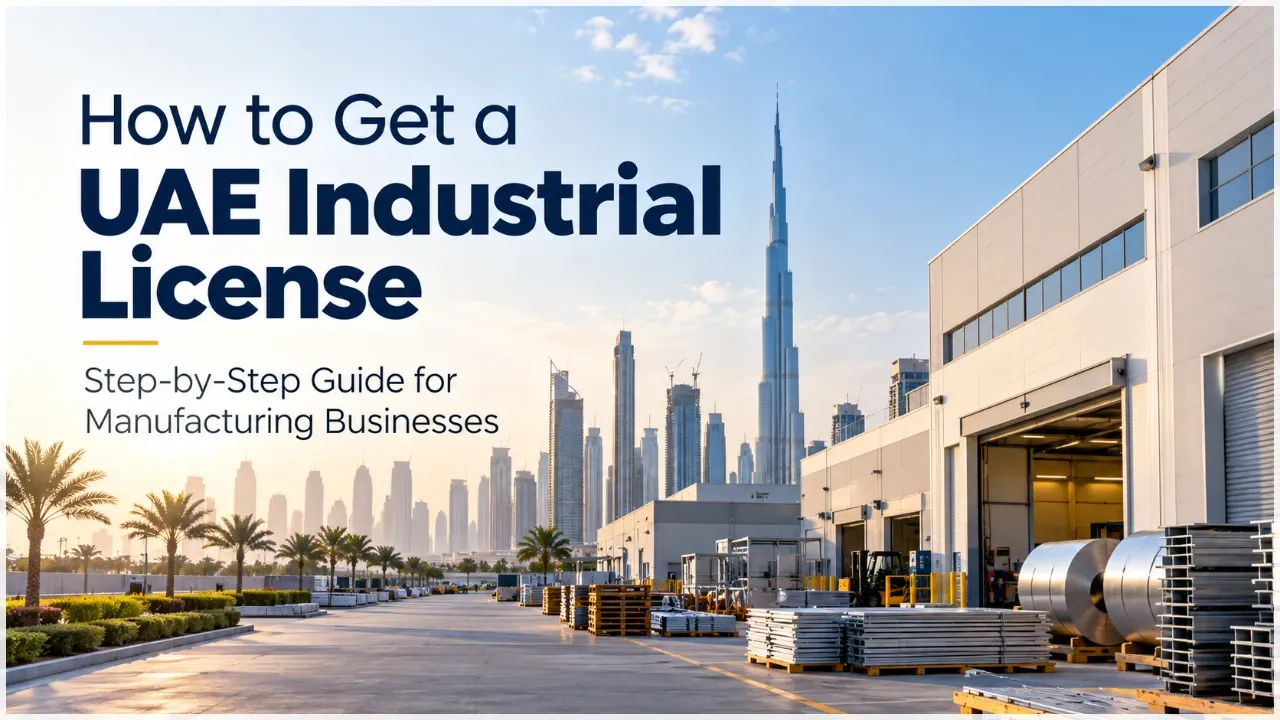
How to Obtain an Industrial License in the UAE: Approvals & Process
The United Arab Emirates has established itself as an industrial and manufacturing powerhouse in the Middle East, driven by visionary government initiatives such as Operation 300bn, the National Strategy for Industry and Advanced Technology, and the "Make it in the Emirates" campaign. These initiatives aim to expand the industrial sector's contribution to the national GDP, promote advanced manufacturing, localize supply chains, and position the UAE as a premier global export hub. For entrepreneurs and international conglomerates seeking to establish factories, processing plants, assembly units, or manufacturing facilities, obtaining a UAE Industrial License is the foundational regulatory requirement.
An Industrial License authorizes commercial entities to manufacture, process, assemble, refine, package, and transform raw materials or semi-finished components into commercial end products. Unlike commercial trading or professional consultancy licenses, the issuance of an industrial license involves rigorous, multi-tiered regulatory scrutiny. Applicants must secure coordinated clearances from municipal authorities, environmental agencies, civil defense departments, zoning authorities, and the Ministry of Industry and Advanced Technology (MoIAT). Navigating this complex process requires strategic planning, technical documentation, and precise operational execution.
Mainland vs Industrial Free Zone Setup: Strategic Jurisdiction Selection
The first critical decision in the industrial licensing roadmap is selecting between a mainland licensing jurisdiction (such as the Department of Economy and Tourism in Dubai or the Department of Economic Development in Abu Dhabi) and specialized industrial free zones such as Dubai Industrial City (DIC), Jebel Ali Free Zone (JAFZA), or Khalifa Industrial Zone Abu Dhabi (KIZAD).
Key considerations when evaluating jurisdictions include:
- Domestic Market Access: Mainland industrial companies can distribute manufactured goods directly across the UAE local market without relying on local commercial distributors or incurring mainland import customs duties.
- Customs Exemptions on Raw Materials: Under federal industrial development policies, qualifying manufacturers can apply for customs duty exemptions on imported raw materials, specialized machinery, and equipment utilized directly in production.
- Port Connectivity and Logistics Infrastructure: Specialized industrial zones offer direct integration with deep-water seaports, intermodal rail links, and major international air freight hubs, making them ideal for export-oriented manufacturers.
- Utility Capacities: Industrial operations requiring high-voltage electricity grids, high-volume industrial water lines, natural gas pipelines, and specialized waste treatment facilities must locate in purpose-built industrial parks.
Key Regulatory Bodies Involved in Industrial Licensing
Issuing an industrial license requires inter-agency coordination across multiple federal and municipal entities. Understanding the role of each authority ensures that compliance procedures proceed without friction:
| Regulatory Authority | Primary Regulatory Mandate | Key Compliance Clearance |
|---|---|---|
| Department of Economic Development (DED / DET) | Primary commercial licensing and business registration | Initial approval, commercial name reservation, and final license issuance |
| Ministry of Industry and Advanced Technology (MoIAT) | Federal industrial oversight and standardization | Industrial Registry entry, factory approval, and customs exemption certificates |
| Municipality / Planning Department | Zoning, structural engineering, and land use oversight | Building permits, structural floor plans, and health and hygiene inspections |
| Civil Defence Authority | Life safety, hazardous storage, and fire prevention | Fire suppression system certification and hazardous materials clearance |
| Environmental Agency / Municipal Environment Dept | Pollution control, emissions, and waste management | Environmental Impact Assessment (EIA) approval and waste disposal permits |
Step-by-Step Roadmap to Securing a UAE Industrial License
Obtaining an industrial license requires following a sequential operational roadmap. Bypassing essential environmental or structural steps can halt licensing proceedings and require costly architectural revisions.
Step 1: Activity Classification and Initial Commercial Approval
Select the precise industrial activities corresponding to your manufacturing operations from the official licensing activity classification list. Submit the initial application to the competent economic authority to obtain initial approval, verifying that the government raises no conceptual objection to the business entity.
Step 2: Securing Industrial Land or Factory Premises
Industrial licenses cannot be issued against virtual addresses or generic commercial office space. The business must secure an appropriately zoned industrial plot, warehouse, or purpose-built factory building in an approved industrial zone. The facility lease must be formally registered and authenticated via Ejari or the relevant free zone leasing registry.
Step 3: Conducting the Environmental Impact Assessment (EIA)
Prior to factory construction or machine installation, the enterprise must submit an Environmental Impact Assessment (EIA) to the competent environmental protection authority. The EIA report details anticipated atmospheric emissions, industrial wastewater discharge, noise levels, solid waste recycling mechanisms, and chemical disposal protocols. Upon review, the environmental agency issues an Environmental Clearance Certificate.
Step 4: Civil Defense and Factory Safety Approvals
The facility's architectural and mechanical layout plans must be submitted to the Civil Defence department. Engineers inspect fire detection systems, automated sprinkler grids, emergency egress routes, ventilation shafts, and specialized storage rooms designed for flammable or hazardous industrial substances. Upon passing inspection, the Civil Defence Safety Certificate is issued.
Step 5: Ministry of Industry (MoIAT) Approval and Industrial Registry
Submit the technical project file to the Ministry of Industry and Advanced Technology. The dossier must detail the factory's capital expenditure, production capacity, automated machinery specifications, electrical load requirements, raw material sourcing plans, and workforce structure. Following verification, MoIAT issues industrial approval and registers the facility in the Federal Industrial Registry.
Step 6: Final License Issuance and Operational Permitting
Compile all clearances from the Municipality, Civil Defence, Environmental Agency, and MoIAT, and submit the complete dossier to the economic licensing department. Upon settlement of statutory licensing fees, the official UAE Industrial License is issued, enabling the factory to begin machinery calibration, commercial production, and international trade.
Mandatory Documentation Checklist for Industrial Licensure
To avoid processing delays, corporate project teams should prepare a comprehensive submission package containing:
- Shareholder passport, visa, and Emirates ID copies along with corporate board resolutions.
- Certified factory engineering layouts, machinery placement blueprints, and electrical single-line diagrams.
- Authenticated tenancy contract or land lease agreement indicating industrial zoning.
- Approved Environmental Clearance Certificate and waste management contracts.
- Civil Defence Building Completion and Safety Compliance Certificate.
- Detailed Project Feasibility Report including production capacities, raw material inventories, and financial projections.
- Certifications of conformity for imported machinery and finished product standards.
Post-Licensing Inspections, ICV Certification, and Industrial Expansion
Securing an initial Industrial License represents the commencement of an ongoing regulatory and operational journey. Once production machinery is installed and trial runs are initiated, municipal engineers, civil defense inspectors, and environmental protection officers conduct comprehensive on-site facility audits to confirm that actual factory operations align strictly with previously approved architectural and environmental blueprints.
To maximize commercial success, industrial operators in the UAE should actively pursue National In-Country Value (ICV) certification. The ICV program evaluates a company's contribution to the local economy by assessing domestic manufacturing expenditures, the procurement of local goods and services, capital investments within the UAE, and the employment of UAE nationals. Achieving a high ICV score delivers a decisive competitive advantage when competing for major supply contracts with federal ministries, sovereign wealth entities, and national industrial giants. Moreover, as manufacturing demand increases, factories can expand their production capacity or introduce complementary product lines by submitting technical expansion dossiers to MoIAT for updated industrial authorizations.
Maximizing Benefits: Customs Exemptions and the "Make it in the Emirates" Advantage
Once an industrial license is active, manufacturers can leverage substantial government incentives. Companies enrolled in the MoIAT Industrial Registry can apply for duty-free importation of industrial machinery, equipment, spare parts, and primary raw materials under the federal customs exemption framework.
Furthermore, manufacturers can participate in the National In-Country Value (ICV) Program. Securing a high ICV score significantly enhances a company's competitiveness when bidding for lucrative government and semi-government procurement contracts across ADNOC, Emirates Global Aluminium, and federal infrastructure agencies. Partnering with seasoned corporate setup and industrial PRO specialists ensures that your enterprise navigates environmental clearances, municipal approvals, and MoIAT registrations swiftly, laying a resilient foundation for long-term manufacturing excellence.
Frequently Asked Questions
What is the primary difference between a commercial and an industrial license in the UAE?
A commercial license allows the trading, buying, and selling of goods without alteration, whereas an industrial license permits the manufacturing, processing, assembly, and transformation of materials into finished goods.
Can an industrial company in the UAE qualify for customs duty exemptions?
Yes, manufacturing entities registered with the Ministry of Industry and Advanced Technology (MoIAT) can apply for customs duty exemptions on imported machinery, equipment, and raw materials.
Is a physical factory or warehouse mandatory for an industrial license?
Yes, an industrial license cannot be issued for virtual offices. A physical industrial warehouse or factory located in an appropriately zoned industrial area is strictly required.
What environmental approvals are required before opening a factory in Dubai?
Manufacturers must submit an Environmental Impact Assessment (EIA) to municipal environmental authorities to obtain clearance covering waste management, emissions, and industrial effluents.
Can foreigners own 100% of an industrial company in the UAE mainland?
Yes, under current UAE foreign ownership laws, foreign investors can maintain 100% ownership of industrial and manufacturing commercial entities in mainland jurisdictions without a local partner.
Planning to Set Up an Industrial Manufacturing Facility in UAE?
Right Time Business Setup guides manufacturing enterprises through every stage of industrial licensing, including MoIAT registry submissions, environmental clearances, Civil Defence approvals, and industrial land leasing. Speak with our experts today.
Start Industrial Setup