01
Sep
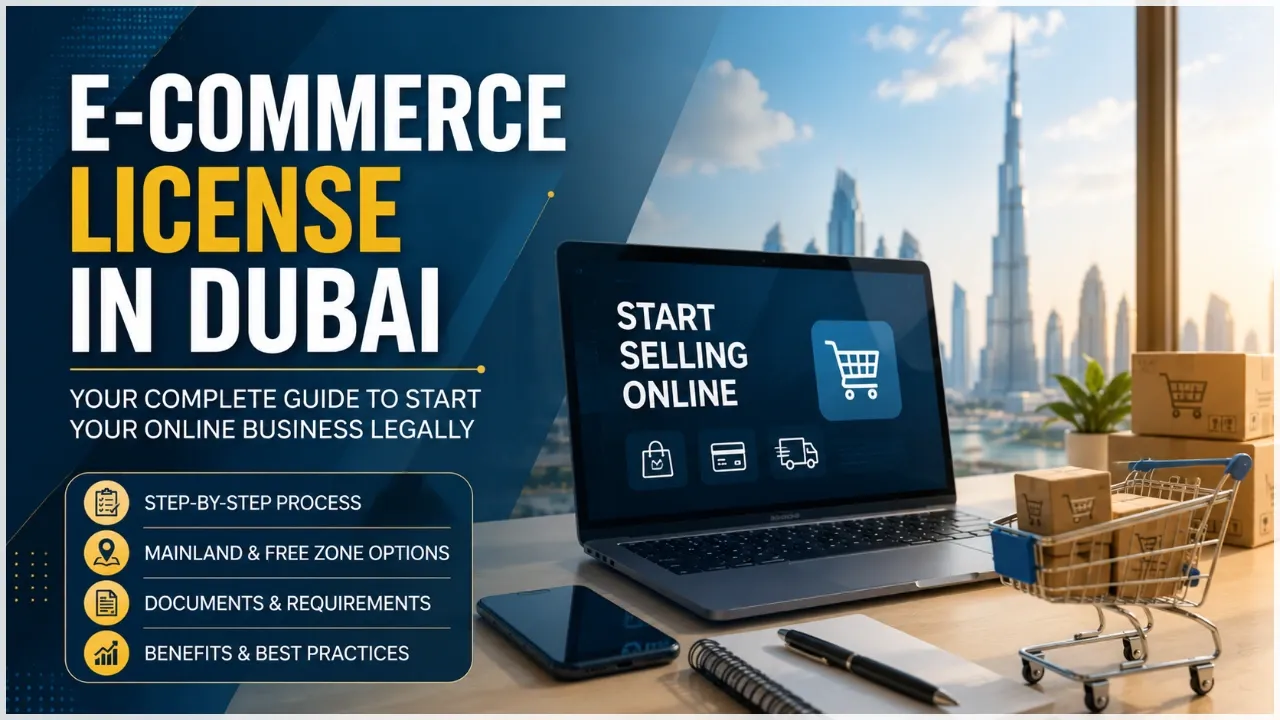
How to Get an E-Commerce License in Dubai: Step-by-Step Guide
The digital marketplace across the United Arab Emirates is expanding at an extraordinary pace. Driven by high smartphone penetration, advanced digital payment infrastructure, robust logistics networks, and a forward-thinking regulatory environment, Dubai has established itself as the undisputed e-commerce capital of the Middle East. For entrepreneurs, global brands, and ambitious startups, establishing an online business in Dubai provides direct access to both affluent local consumers and rapidly growing regional markets across the GCC and wider MENA region.
However, operating a legal and scalable online commercial venture in the UAE requires proper licensing. Conducting online sales or digital commercial activities without a valid license is strictly prohibited and subject to severe penalties. Obtaining an e-commerce license legitimizes your business, enables corporate banking, unlocks tier-one payment gateways, allows you to sponsor investor and employee residence visas, and builds crucial credibility with consumers and suppliers.
This comprehensive guide details the step-by-step process of securing an e-commerce license in Dubai, comparing key jurisdictions, highlighting essential operational requirements, and outlining best practices for building a compliant and successful digital enterprise.
Understanding the E-Commerce License in Dubai
An e-commerce license is an official commercial permit issued by UAE licensing authorities that authorizes a company to buy, sell, market, and distribute goods or services over the internet, digital platforms, mobile applications, and social media channels.
In Dubai, e-commerce licensing caters to a wide spectrum of online commercial models, including:
- Business-to-Consumer (B2C) Online Retail: Direct sales of consumer electronics, fashion, beauty, home decor, and lifestyle goods through standalone websites or mobile applications.
- Multi-Vendor Marketplace Platforms: Digital ecosystems that connect third-party merchants with prospective buyers, facilitating transactions, inventory listings, and platform commissions.
- Dropshipping Businesses: Order fulfillment models where the online retailer markets products and routes orders directly to third-party manufacturers or suppliers who handle fulfillment.
- Digital Products and Software as a Service (SaaS): Electronic delivery of software downloads, subscription media, online courses, and digital assets.
- Social Commerce: Authorized commercial trading conducted through verified business accounts on social channels like Instagram, TikTok, and WhatsApp Business.
Mainland vs. Free Zone: Choosing Your Jurisdiction
One of the foundational decisions in your business setup journey is selecting between a Dubai Mainland license and a Free Zone license. Each jurisdiction offers distinct strategic benefits depending on your target audience, fulfillment structure, and operational scope.
1. Dubai Mainland E-Commerce License
A Mainland e-commerce license is issued by the Department of Economy and Tourism (DET), formerly known as the DED. Under modern UAE commercial company legislation, foreign investors can maintain 100 percent foreign ownership of mainland commercial e-commerce entities.
Key advantages of mainland setup include:
- Unrestricted direct trading with consumers and businesses across all seven Emirates without intermediary distributors.
- Freedom to open physical retail showrooms, customer service centers, and commercial storage facilities anywhere in Dubai.
- Ability to bid for lucrative UAE government tenders, municipal supply contracts, and corporate procurement programs.
- Seamless integration with local delivery fleets and third-party logistics (3PL) partners operating across the domestic market.
2. Free Zone E-Commerce License
Dubai is home to several specialized free trade zones—such as Dubai CommerCity, Dubai Internet City, Dubai Multi Commodities Centre (DMCC), International Free Zone Authority (IFZA), and Meydan Free Zone—that offer specialized digital commerce packages.
Key advantages of free zone setup include:
- Simplified and swift incorporation workflows with 100 percent foreign ownership.
- Flexible workspace packages ranging from digital flexi-desks and shared offices to dedicated fulfillment facilities.
- Exemption from customs duties on goods stored within designated free trade zones for international transshipment.
- Proximity to specialized technology ecosystems, digital accelerators, and industry-specific networks.
Step-by-Step Guide to Getting Your E-Commerce License in Dubai
Establishing an online enterprise in Dubai follows a structured, transparent regulatory framework. Following these sequential steps ensures a smooth licensing journey without administrative setbacks.
Step 1: Determine Your Business Activity and Legal Structure
Begin by defining your exact online commercial activities. UAE licensing authorities maintain structured activity codes that specify whether you are selling tangible physical goods, offering professional digital consultancy, operating a marketplace, or providing subscription services.
Next, select the legal form for your company. Common structures include a Sole Establishment (for single-owner professional services) or a Limited Liability Company (LLC / FZ-LLC), which protects personal assets by limiting shareholder liability to their capital contribution.
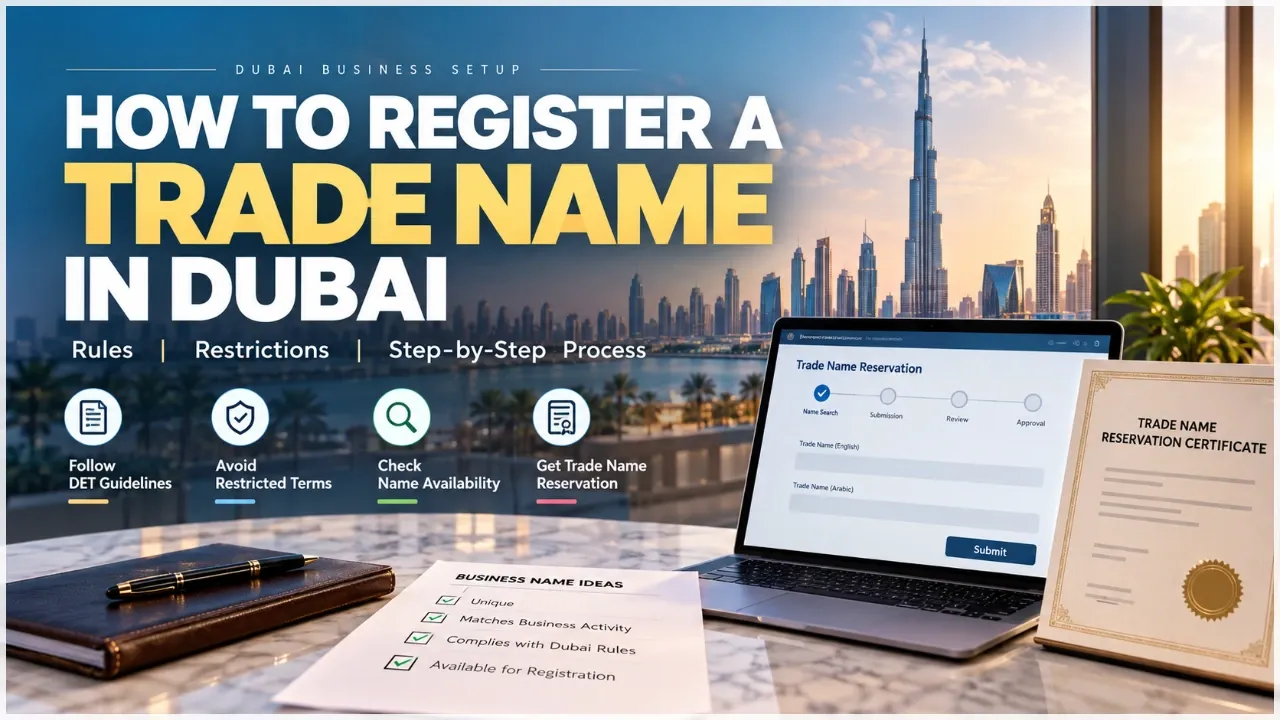
Step 2: Choose and Reserve Your Trade Name
Your company trade name represents your official brand identity before government bodies and financial institutions. The Department of Economy and Tourism (DET) and free zone authorities maintain clear naming guidelines:
- The name must reflect the nature of the business activity (e.g., E-Commerce, Trading, Online Services).
- It must not duplicate or closely resemble existing registered trademarks or company names in the UAE.
- It must avoid offensive, blasphemous, politically sensitive, or sectarian language.
- If naming the business after a person, that individual must be a listed partner or shareholder, and initials or abbreviations are not permitted.
Step 3: Apply for Initial Approval
Initial approval is an official certificate from the licensing authority acknowledging that the UAE government has no objection to the establishment of your business. This milestone allows you to proceed with lease agreements, legal drafting, and third-party regulatory clearances without delay.
Step 4: Draft the Memorandum of Association (MOA)
For multi-shareholder companies and LLCs, drafting a comprehensive Memorandum of Association (MOA) is mandatory. The MOA defines shareholder ownership percentages, voting rights, profit and loss distribution mechanisms, management powers, and dispute resolution protocols. In modern setups, MOA signing is conducted digitally via UAE Pass or through Dubai Courts notarization.
Step 5: Finalize Your Registered Office and Tenancy (Ejari)
Every commercial entity in Dubai must maintain a verifiable registered business address. For digital businesses, licensing authorities provide flexible physical and digital options:
- Mainland Virtual / Flexi-Desk: Suitable for digital startups, allowing initial licensing with low overhead.
- Dedicated Commercial Office: Essential for enterprises requiring physical administrative staff and higher visa allocations, registered through an official Ejari contract.
- Free Zone Smart Desk / Shared Workstation: Bundled desk solutions fulfilling official free zone residency and substance requirements.
Step 6: Secure External Government Approvals (If Applicable)
While standard consumer goods do not require special clearances, specific e-commerce sectors necessitate prior approvals from relevant regulatory bodies:
- Health supplements, cosmetics, and packaged food: Dubai Municipality and Food Safety Department clearances.
- Pharmaceuticals and medical devices: Ministry of Health and Prevention (MOHAP) permits.
- Telecommunication hardware and wireless devices: Telecommunications and Digital Government Regulatory Authority (TDRA) approval.
- Publishing, digital media, and video streaming: National Media Council / Media Regulatory Office permissions.
Step 7: Trade License Issuance and Fee Settlement
Upon submitting all verified documents, approvals, and lease registrations, the licensing authority issues your official E-Commerce Trade License, Certificate of Incorporation, and Chamber of Commerce membership registration.
Essential Post-Licensing Operational Steps
Receiving your trade license marks the formal birth of your company, but operationalizing your digital storefront requires several vital next steps:
1. Corporate Bank Account Opening
A dedicated corporate bank account in the UAE is mandatory to receive customer funds, pay international suppliers, manage payroll, and comply with tax audits. UAE commercial banks perform rigorous Know Your Customer (KYC) reviews, assessing your business plan, shareholder background, and projected transactions.
2. Payment Gateway Integration
To convert website traffic into sales, integrating a secure, multi-currency payment gateway is essential. Leading payment aggregators operating in Dubai—such as Stripe UAE, PayTabs, Network International, Telr, and Amazon Payment Services—require a copy of your valid e-commerce license, corporate bank account details, and a live website with clear privacy and refund policies.
3. Customs Client Code and Logistics Registration
If your e-commerce model involves importing physical inventory from manufacturing hubs in Asia, Europe, or the Americas, you must register your company with Dubai Customs to obtain a Customs Client Code. This enables smooth clearance of containers and air freight through Dubai ports and airports.
4. UAE Residency Visa Processing
As a licensed e-commerce company owner, you are entitled to apply for UAE investor residency visas for yourself, business partners, and immediate family members (spouse, children, and parents). Your visa quota also allows you to hire digital marketers, software engineers, and administrative personnel.
Practical Example: Launching a Specialty Apparel Brand
Consider an entrepreneur wishing to launch a contemporary online modest fashion label based in Dubai:
- Jurisdiction: The founder chooses a Dubai Mainland LLC structure to enable direct warehousing in Al Quoz, local fulfillment across the UAE, and wholesale distribution to GCC boutiques.
- Trade Name: The name is reserved with the DET under commercial e-commerce activities.
- Premises: A boutique office and stockroom are leased and registered with Ejari.
- Payment & Logistics: Following license issuance, the brand opens a corporate account with a leading UAE bank, integrates Stripe on their Shopify platform, and establishes fulfillment agreements with a regional courier network.
- Result: Within weeks, the business begins processing local orders seamlessly, offering next-day delivery across Dubai and Abu Dhabi.
Common Mistakes to Avoid in E-Commerce Setup
- Trading on Personal Social Media Without a License: Selling products without an e-commerce license violates UAE commercial laws and can result in severe fines and digital asset blocking.
- Overlooking Customs Code Requirements: Ordering commercial inventory under personal names causes goods to be detained at customs clearance points.
- Ignoring VAT and Corporate Tax Obligations: Failing to maintain organized digital books or delaying corporate tax registration can lead to avoidable administrative penalties.
- Launching Without Clear Website Terms: Payment gateway providers require transparent refund policies, shipping terms, customer service contacts, and data protection disclosures on your website before activating live merchant gateways.
Conclusion
Dubai presents an unrivaled environment for building and scaling a successful e-commerce enterprise. With its world-class logistics networks, high-income consumer demographic, and business-friendly legal frameworks, the opportunities for digital entrepreneurs are vast. By understanding the distinction between mainland and free zone jurisdictions, following a structured setup roadmap, and ensuring full regulatory compliance from day one, you can launch your online venture with total confidence.
Frequently Asked Questions
1. Can I sell products across the UAE with a Free Zone e-commerce license?
A Free Zone e-commerce license allows you to sell goods directly online to global customers. To deliver physical products to local UAE consumers directly, businesses typically partner with licensed local distributors or courier logistics companies that clear customs into the mainland.
2. Do I need a physical office space to obtain an e-commerce license in Dubai?
No, physical commercial office space is not strictly required. Many free zones and mainland licensing programs offer smart desk, flexi-desk, or virtual office arrangements that satisfy legal address requirements for online businesses.
3. What is the difference between a DED E-Trader license and an E-Commerce Commercial license?
A DED E-Trader license is designed for individual UAE or GCC national residents operating micro-businesses from home on social media. An E-Commerce Commercial license can be owned by foreign investors of any nationality, allows hiring staff, sponsoring investor visas, and building scalable marketplace platforms.
4. Which payment gateways are compatible with Dubai e-commerce stores?
Dubai-licensed e-commerce businesses can integrate leading international and regional payment gateways, including Stripe UAE, PayTabs, Network International, Telr, Amazon Payment Services, and Checkout.com once their corporate bank account is operational.
5. Is a Customs Client Code required for an online store in Dubai?
If your e-commerce business imports physical goods from overseas into Dubai or exports products internationally, registering with Dubai Customs to obtain a Customs Client Code is mandatory to facilitate clearance at ports and airports.
Ready to Launch Your E-Commerce Business in Dubai?
From selecting the right jurisdiction to trade license issuance, payment gateway integration, and visa processing, our business setup specialists handle your entire e-commerce formation smoothly.
Start Your E-Commerce Setup