19
Aug
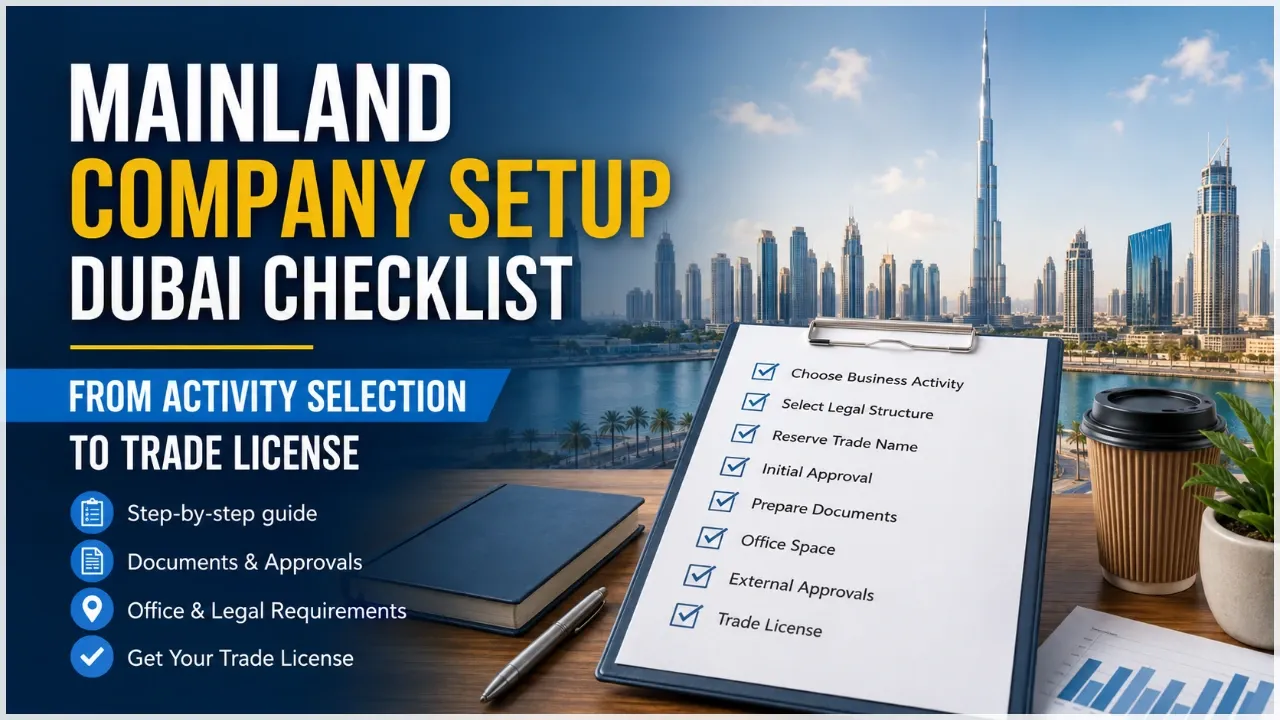
Mainland Company Setup Dubai Checklist: From Activity Selection to Trade License
Starting a business in Dubai can be an exciting opportunity, but the setup process involves several decisions and government procedures. For entrepreneurs who want to operate across the UAE and work with a wide range of customers, a mainland company can be a practical option.
From choosing the right business activity to selecting a legal structure, arranging office space, completing approvals, and obtaining the trade license, each step needs careful attention.
This checklist explains the main stages of mainland company setup in Dubai in simple terms, so you can understand what needs to be done before your business starts operating.
What Is a Dubai Mainland Company?
A mainland company is a business licensed to operate in Dubai under the relevant local authority. Unlike a free zone company, a mainland business can generally conduct business across Dubai and the wider UAE, subject to the rules and approvals applicable to its specific activity.
Mainland businesses can be suitable for entrepreneurs who want to:
- Serve customers directly across the UAE
- Work with local companies and government-related organizations
- Open a physical office or commercial location
- Employ staff according to business requirements
- Expand their operations within the UAE
- Participate in business opportunities that require a mainland license
The exact requirements depend on the business activity and legal structure selected.
Dubai Mainland Company Setup Checklist
A successful setup starts with making the right decisions before submitting applications. The following checklist covers the major stages.
1. Select Your Business Activity
The first step is deciding exactly what your company will do.
Dubai has a wide range of approved commercial, professional, industrial and other business activities. Your chosen activity determines the type of license, approvals and documentation your business may require.
For example, a company providing accounting services may need a professional activity, while a business involved in buying and selling products may require an appropriate commercial activity.
Before choosing an activity, consider:
- What products or services will you offer?
- Who are your customers?
- Will you import or export goods?
- Will you need a physical shop or office?
- Do you require approval from another government authority?
Choosing an activity simply because it sounds similar to your business can create problems later. The activity should accurately match what your company plans to do.
2. Choose the Legal Structure
After selecting the activity, you need to determine the legal structure of the company.
Depending on the activity and circumstances, possible structures may include an LLC and other permitted forms of business establishment.
An LLC is a common option for many businesses because it provides a formal company structure and can be suitable for businesses planning to operate and grow in the UAE.
The best structure depends on factors such as:
- Number of owners
- Business activity
- Ownership requirements
- Liability considerations
- Future expansion plans
It is worth confirming the appropriate structure before preparing the incorporation documents.
3. Reserve the Trade Name
Your company needs an approved trade name before completing the licensing process.
The name should comply with applicable naming rules and should not conflict with an existing registered business name or contain prohibited terms.
When choosing a name, think beyond registration. A good business name should also be:
- Easy to remember
- Suitable for your industry
- Professional
- Easy to pronounce
- Suitable for future branding
For example, if you are planning to expand from accounting into broader financial services, choosing a very narrow name may limit your branding options later.
4. Obtain Initial Approval
Once the basic company details have been decided, the setup process can move toward initial approval.
Initial approval generally indicates that the relevant authority has no objection to proceeding with the company formation based on the submitted information.
However, initial approval is not the same as having a final trade license. Additional steps and documents may still be required before the company can legally begin its activities.
If your activity is regulated, additional government or local authority approvals may also be necessary.
5. Prepare the Required Documents
Documentation is an important part of company formation.
Depending on the company structure and activity, you may need documents such as:
- Passport copies of shareholders or partners
- Passport-size photographs where required
- Proposed trade name details
- Initial approval documents
- Memorandum of Association or other incorporation documents
- Office tenancy documents
- Additional approvals for regulated activities
Documents may also need to be translated, attested or prepared in a specific format depending on the circumstances.
Using a professional business setup or PRO service can help reduce delays caused by incomplete documentation.
6. Arrange a Business Location
A mainland business normally needs an appropriate business premises based on its activity and licensing requirements.
The office, shop, warehouse or other premises should be suitable for the business activity. The tenancy arrangement may also need to be registered through the applicable system.
For example, a consulting company may require an office suitable for professional services, while a trading business may need a location that supports its operational requirements.
Before signing a long-term lease, confirm that the premises is acceptable for the intended business activity and license.
7. Complete External Approvals if Required
Not every business activity has the same approval requirements.
Some activities may require approval from additional government or regulatory authorities before the license can be issued.
This is particularly important for businesses operating in regulated sectors.
Examples may include:
- Healthcare-related activities
- Certain financial services
- Education
- Tourism
- Engineering
- Food-related businesses
- Other regulated professional activities
This is why selecting the correct activity at the beginning is so important.
8. Prepare the Company Agreement
Depending on the legal structure, the company may need a Memorandum of Association or other formal incorporation agreement.
The document generally sets out important information about the company and its ownership structure.
It is important that the information in these documents matches the details submitted during the licensing process.
9. Submit the Final License Application
After completing the required approvals, documents and premises-related requirements, the final application can be submitted.
The relevant authority reviews the application and supporting documents before issuing the license when all requirements have been satisfied.
The type of license depends on the selected business activity.
Common categories include commercial and professional licenses, while other specific licensing categories may apply to particular businesses.
10. Receive Your Trade License
Once the application is approved and the applicable government fees are paid, the trade license can be issued.
This is a major milestone because the company has completed the core licensing process.
However, obtaining the trade license does not necessarily mean every business-related procedure is finished.
Depending on your plans, you may still need to arrange:
- Establishment-related registrations
- Immigration and labour files
- Employee visas
- Investor or partner visas
- Emirates ID procedures
- Bank account opening
- Accounting and bookkeeping
- VAT registration, where applicable
- Corporate tax registration and compliance
- Other operational registrations
What Happens After Getting the Trade License?
A new company needs more than a license to operate smoothly.
Open a Corporate Bank Account
After incorporation, the company can begin the process of opening a UAE business bank account.
Banks may request company documents, shareholder information, business details, expected transaction volumes and supporting documents.
The requirements vary between banks, so having your company documentation organized can make the process easier.
Arrange Visas
If you plan to live and work in the UAE or employ staff, visa processing becomes an important next step.
Depending on the situation, businesses may require partner, investor or employment-related visa services.
The number of employees a company can sponsor and the applicable requirements depend on factors such as the company, office and immigration rules.
Set Up Accounting and Tax Compliance
Accounting should be arranged from the beginning rather than waiting until the end of the financial year.
A business may need to manage bookkeeping, financial records, VAT obligations and UAE corporate tax requirements depending on its circumstances.
Keeping proper records from day one can make future tax filing and financial reporting much easier.
Practical Example: Setting Up a Consulting Company
Consider an entrepreneur who wants to start a management consulting business in Dubai.
A simplified setup journey could look like this:
- Select the appropriate consulting activity.
- Choose the suitable legal structure.
- Reserve an acceptable trade name.
- Obtain initial approval.
- Prepare incorporation documents.
- Arrange an appropriate office.
- Obtain any required external approvals.
- Complete the final license application.
- Pay the applicable fees.
- Receive the mainland trade license.
- Proceed with banking, visas and tax-related requirements.
The actual requirements can vary depending on the exact activity and company structure.
Common Mistakes to Avoid
Choosing the Wrong Business Activity
Your license should reflect the activities you actually intend to conduct. Changing or adding activities later can require additional procedures and fees.
Looking Only at the License Price
The total cost of setting up a business is not always limited to the trade license fee.
You may also need to consider:
- Office or tenancy costs
- Government charges
- External approval fees
- Immigration-related expenses
- Visa costs
- Establishment-related charges
- Professional service fees
- Accounting and tax compliance costs
Ignoring Office Requirements
Some entrepreneurs select an activity first and only later discover that the business has specific premises requirements.
Confirm the office requirements before committing to a property.
Delaying Accounting and Tax Setup
Financial records should be maintained from the beginning. Waiting until the first tax deadline can make compliance more difficult.
When Should You Consider Professional Setup Assistance?
Dubai company formation involves several stages, and requirements can differ depending on the activity, ownership structure and business plans.
Professional business setup consultants can help with areas such as:
- Activity selection
- Trade name procedures
- Company formation documentation
- License applications
- Government approvals
- PRO services
- Visa processing
- Emirates ID procedures
- Accounting and tax-related support
The goal is not simply to obtain a license but to establish the business correctly so that it can operate and grow without unnecessary administrative problems.
Final Dubai Mainland Company Setup Checklist
Before starting operations, make sure you have reviewed the following:
- Business activity selected
- Legal structure confirmed
- Trade name selected and approved
- Initial approval obtained
- Required documents prepared
- External approvals completed where applicable
- Suitable office or business premises arranged
- Incorporation documents completed
- Final license application submitted
- Trade license issued
- Company bank account process started
- Required visas arranged
- Accounting system established
- Tax registration and compliance requirements reviewed
Conclusion
Setting up a mainland company in Dubai becomes much easier when the process is planned step by step. The most important decisions usually come at the beginning: selecting the correct business activity, choosing an appropriate legal structure and understanding the premises and approval requirements.
Once these decisions are correct, the remaining process becomes more straightforward, from trade name reservation and documentation to final license issuance.
For entrepreneurs planning to start a business in Dubai, a clear checklist can help avoid unnecessary delays and unexpected requirements. With the right preparation and professional support where needed, you can build a strong foundation for your new UAE business.
Frequently Asked Questions
1. What is a mainland company in Dubai?
A mainland company is a business licensed to operate in Dubai under the applicable local licensing authority. It can be suitable for businesses that want to serve customers across Dubai and the UAE, subject to the rules applicable to their activity.
2. How do I choose a business activity for my Dubai company?
Start by clearly identifying the products or services your company will provide. Then select the approved activity that most accurately matches those operations. Some activities may require additional government approvals.
3. Do I need an office for a Dubai mainland company?
Office or premises requirements depend on the business activity and licensing conditions. Some businesses may have different requirements, so it is best to confirm them before signing a tenancy agreement.
4. What types of licenses are available for mainland businesses?
The appropriate license depends on the nature of the business. Commercial and professional licenses are common categories, while specific activities may fall under other licensing classifications.
5. What should I do after receiving my trade license?
After receiving the license, you may need to complete banking, immigration, visa, Emirates ID, accounting and tax-related procedures depending on your business and circumstances.
Ready to Start Your Dubai Business?
Planning a mainland company setup can be much easier when every step is handled correctly from the beginning. Get professional assistance with business activity selection, company formation, trade licensing, PRO services and related UAE business procedures.
Start Your Business Setup