25
Nov
Dubai Business Setup Premises: Review Shared Offices Before Choosing a Package
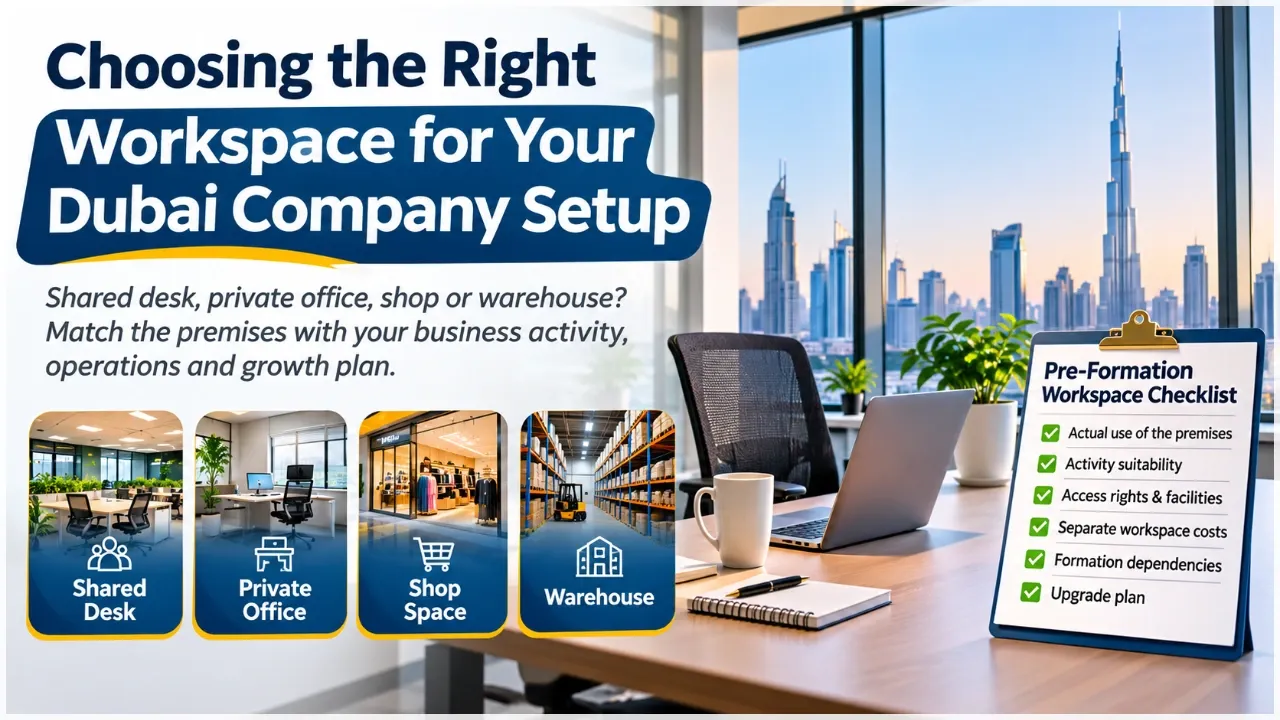
Workspace is part of company formation planning, even when the business will deliver most work online. A shared desk, private office, shop and warehouse serve different purposes. Compare the premises proposal against your activity, customer interactions and operating needs before accepting it as a standard package inclusion.
Describe how the business will use the space
List whether customers will visit, goods will be stored, equipment will be installed or staff will work from the premises. Add any need for confidential meetings, delivery access or specialist facilities. Give this description to the setup adviser and workspace provider. An address alone does not answer these operational questions. The correct arrangement depends on the business activity and the requirements of the relevant authority.
Distinguish access from a dedicated facility
Ask what the workspace agreement actually provides: booking rights, access hours, a dedicated room, shared meeting facilities or another arrangement. Confirm which costs are included and which are charged separately. Check whether the agreement can be used for the proposed formation route. Do not assume a package label explains these rights. Keep a copy of the provider's written description and the terms that apply to your company.
Align the workspace decision with the formation sequence
Before signing a long commitment, ask which premises details need to be confirmed for incorporation and which checks should happen first. Identify the consequences if the location or activity is not accepted. Review refund, replacement and start-date terms with the provider. This is especially useful when a founder is choosing between remote services and an operation requiring customer access. Avoid locking the business into space selected for an earlier version of the plan.
Plan a realistic upgrade path
A small service company may begin with a permitted shared arrangement and later need private meeting rooms or a larger office. Compare the process and costs of that change, subject to authority and provider requirements. Write down the trigger for upgrading, such as regular customer visits or a new operational function. This turns the premises choice into part of the launch plan instead of an afterthought attached to the cheapest available setup offer.
Your pre-formation checklist
- Actual use of the premises documented
- Activity suitability checked
- Access rights and facilities stated in writing
- Separate workspace charges identified
- Formation dependencies and cancellation terms reviewed
- Upgrade assumptions included in the launch plan
Plan your next step with Right Time
Bring your business model, proposed owners and operating requirements to a business setup consultation with Right Time. We can help you frame the company formation questions and review the scope of support you need. Right Time is an independent private consultancy. Any engagement follows an agreed scope and written quotation; external decisions and requirements remain with the relevant authorities and providers.
Official setup references
Use these official resources to check the current formation route. The planning examples above are illustrative; they are not authority fee quotations or promised approval timelines.
- Invest in Dubai: company setup options
- UAE Government: mainland business formation steps
- UAE Government: starting a business in a free zone
Prepared on 3 November 2026. Confirm current activity, ownership and premises requirements for your circumstances before committing to a setup route.
Frequently Asked Questions
Is a shared desk suitable for every new business?
No. Check the actual activity, operating model and authority requirements.
Should I sign an office agreement before choosing my activity?
Settle the intended work and obtain advice on premises requirements before making a major commitment.
Plan your Dubai company setup
Discuss your activity, ownership and operating requirements with Right Time. Request a clear scope and written quotation.
Discuss business setup